

In Nigeria, there are 12 states that apply Sharia law in both civil and criminal cases. These states are Zamfara, Kano, Sokoto, Katsina, Bauchi, Borno, Jigawa, Kebbi, Yobe, Kaduna, Niger and Gombe.
According to the CIA World Factbook: Nigeria is about 53.5% Muslim, 45.9% Christian, .6% other religion. Officially Nigeria is a secular state and prohibits the federal or any state government from adapting any state religion.
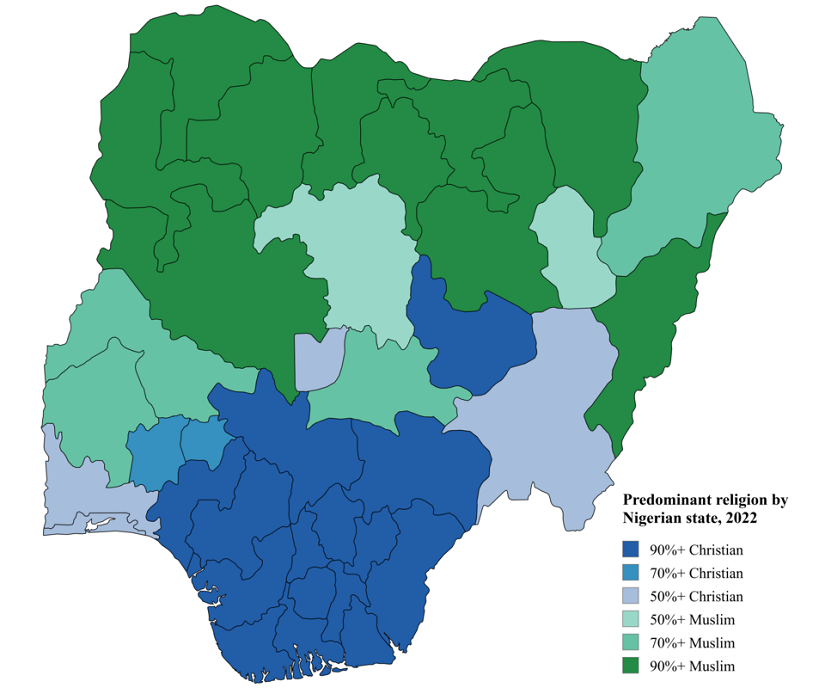
Source: https://upload.wikimedia.org/wikipedia/commons/8/88/Religious_map_of_Nigeria,_2022.png
The primary psychological driver for Muslims converting to Christianity is a shift from a theology of law and submission to a psychological experience of grace, unconditional love, and personal intimacy with God. This profound emotional and spiritual pivot is frequently catalyzed by several distinct factors:
Reactions to converting from Islam to Christianity in Nigeria vary widely. They depend heavily on the region and the family's strictness. In the northern, more conservative areas, converts often face severe risks like violence and disownment. In the south, families are typically much more tolerant and accepting.
Strictly Conservative Areas (The North and Middle Belt)
Rejection: Families may disown the convert and cut all communication.
Extreme Measures: Some converts face physical harm, house arrest, or forced isolation in religious centers.
Loss of Rights: Converts can lose their inheritance, property, or child custody rights.
Protection: In severe cases, converts require court orders or must escape to safe, Christian-majority communities to survive.
---------------------------------------------------------------------------------------------------------------------------------------
Progressive Areas (The South and Southwest)
Tolerance: The Yoruba people of the southwest value cultural unity over strict religious division.
Coexistence: Families usually practice religious tolerance. It is common for Muslims and Christians to attend the same weddings, funerals, and holiday meals.
Acceptance: While some tension might exist, outright violence is rare, and families generally learn to accept the convert over time.
According to the CIA World Factbook: Nigeria is about 53.5% Muslim, 45.9% Christian, .6% other religion. Officially Nigeria is a secular state and prohibits the federal or any state government from adapting any state religion.
Source: https://upload.wikimedia.org/wikipedia/commons/8/88/Religious_map_of_Nigeria,_2022.png
The primary psychological driver for Muslims converting to Christianity is a shift from a theology of law and submission to a psychological experience of grace, unconditional love, and personal intimacy with God. This profound emotional and spiritual pivot is frequently catalyzed by several distinct factors:
- The Assurance of Unconditional Love: In Islamic theology, God’s love is largely conditional and dependent upon an individual’s obedience and good works. Converts are deeply drawn to the Christian message that God’s love is unearned, unconditional, and freely offered through Christ’s sacrifice.
- The “Fatherhood” of God: Many converts experience profound psychological relief in the transition from viewing God strictly as an all-powerful Master—where humans are considered subservient slaves—to the Christian concept of God as an intimate, loving Father.
- Supernatural Experiences and Dreams: A significant psychological and spiritual catalyst for ex-Muslims is the occurrence of dreams or visions. Studies and testimonies often indicate that personal encounters with Jesus in visions bring a profound, immediate sense of peace, love, and direction that compels them toward the Christian faith.
- The Appeal of Grace over Works: In Islam, salvation can feel precarious, with no absolute guarantee of entering heaven. Christianity’s core tenet of salvation through faith—where believers are assured of grace and eternal life regardless of their personal failures—provides significant psychological comfort and relief from religious anxiety.
- Disillusionment with Strict Traditions: For some, dissatisfaction with the rigidity of Islamic law, militant factions, or the perceived harshness of the Quran’s teachings drives a search for alternative spiritual frameworks focused on compassion and non-violence.
- Relatability of the Christian Savior: Converts often find the depiction of Biblical prophets in Christianity more emotionally relatable, as they are portrayed as fallible humans who receive forgiveness. Additionally, Jesus’ teachings of turning the other cheek and displaying compassion for the marginalized heavily resonate with seekers.
Reactions to converting from Islam to Christianity in Nigeria vary widely. They depend heavily on the region and the family's strictness. In the northern, more conservative areas, converts often face severe risks like violence and disownment. In the south, families are typically much more tolerant and accepting.
Strictly Conservative Areas (The North and Middle Belt)
Rejection: Families may disown the convert and cut all communication.
Extreme Measures: Some converts face physical harm, house arrest, or forced isolation in religious centers.
Loss of Rights: Converts can lose their inheritance, property, or child custody rights.
Protection: In severe cases, converts require court orders or must escape to safe, Christian-majority communities to survive.
---------------------------------------------------------------------------------------------------------------------------------------
Progressive Areas (The South and Southwest)
Tolerance: The Yoruba people of the southwest value cultural unity over strict religious division.
Coexistence: Families usually practice religious tolerance. It is common for Muslims and Christians to attend the same weddings, funerals, and holiday meals.
Acceptance: While some tension might exist, outright violence is rare, and families generally learn to accept the convert over time.
Last edited:
