

After he graduated. He was recruited by the KGB and underwent initial training at the KGB's 401st School in a suburb of Leningrad. He focused on subjects such as surveillance, recruitment techniques, and operational security. This introductory course lasted approximately six months to one year. After graduating from this introductory course, he was ready to go to work. Putin was assigned to the Second Chief Directorate of the KGB in Leningrad. This assignment covered counterintelligence operations within the Soviet Union. His job duties involved keeping an eye on potential foreign agents and recruiting activities among people who visited the USSR.
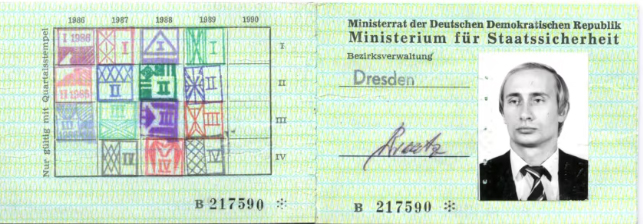
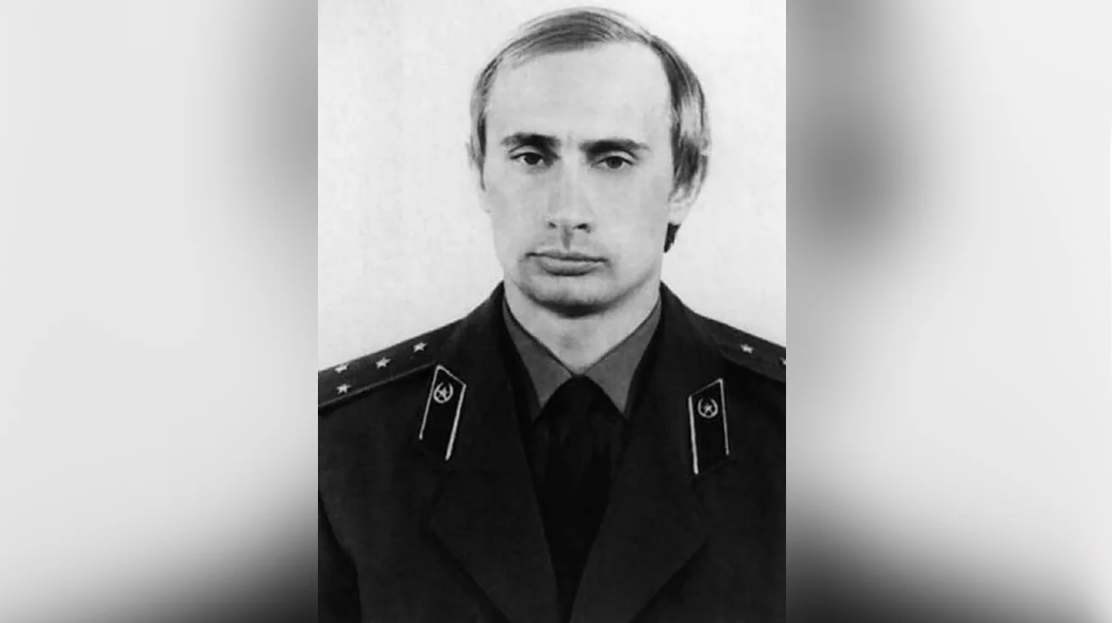
Putin gained experience in internal threat assessment without being in the spotlight by high profile operations. Historical records indicate his performance was average but had difficulty in language skills like German. This assignment lasted until around 1985, when his work shifted towards foreign intelligence preparation. Putin was moved to a post in Dresden, in the former German Democratic Republic.
In August 1985, Vladimir Putin, then a KGB major aged 32, was posted to Dresden in the German Democratic Republic (East Germany) as his first foreign assignment. While working as a consular office on the surface, his undercover duties involved recruiting potential agents among Western academics, journalists, and businesspeople visiting the region. He worked with the Stasi - which was East Germany's Ministry for State Security. At the time, KGB served as mentor and director assisting the Stasi's extensive surveillance network.
Much of Putin's actual work in Dresden was routine administrative tasks which included drafting reports and handling informant logistics. Colleagues later described the time spent on the paperwork as inefficient, which made up of 70% of the workday. During this period, Putin became fluent in German. This fluency assisted interactions with local officials, informants, and his family (including wife Lyudmila and young daughters). As a result of this fluency Putin and his family enjoyed a higher standard of living compared to what he would have had in the Soviet Union because of access to Western Goods.
This assignment exposed him to the fact that the rigid but functional East German system was more efficient than the Soviet system. However, at the same time, the underlying economic stagnation affecting East Germany was the handwriting on the wall that foreshadowed the regime's vulnerabilities. On November 9, 1989, the Berlin Wall fell and was the beginning of the end of the East German communist regime. This had a dramatic effect on Putin’s service. On December 5, 1989, amid widespread protests, crowds stormed the nearby Stasi headquarters. a group then advanced on the KGB office where Putin was stationed. Putin confronted the demonstrators, warning them that his armed colleagues were authorized to use force if necessary. This temporarily dispersed the crowd. Afterwards, he set about overseeing the destruction of sensitive KGB files. He personally burned such a large quantity that the furnace was overloaded.
Putin contacted a nearby Soviet tank unit but was told that Moscow was silent and no intervention orders would come, leaving him pretty much to his own devices. This episode illustrated the rapid disintegration of East Germany’s centralized authority in the face of popular unrest. As East Germany's leadership gradually collapsed without the USSR coming to the rescue, this paved the way for German reunification in 1990. Putin later reflected on this event as evidence on the hazards of the elite detaching itself from the public will, and the necessity of state cohesion in subsequent roles. He departed Dresden in early 1990, returning to Leningrad as KGB operations wound down amid the broader Soviet decline.
Amid the KGB's reorganization following the Eastern Bloc upheavals, he was initially assigned to counterintelligence duties at the local KGB directorate. In June 1990, after his former law professor Anatoly Sobchak was elected chairman of the Leningrad City Soviet, Putin transitioned into a civilian role as an advisor on international affairs.
Putin headed the city's Committee for External Relations while retaining his KGB affiliation. He formally resigned from the KGB (with the rank of lieutenant colonel) on August 20, 1991 which was the second day of the failed hardline coup against Mikhail Gorbachev. He cited his opposition to the putsch and supported democratic reformers (i.e. his mentor Anatoly Sobchak who was the Mayor of St. Petersburg). He continued supporting the mayor's administration in St. Petersburg (Leningrad's post-Soviet name) amid the USSR's dissolution.
Last edited: